The BLUETTI AC180 pairs a 1,152Wh LiFePO4 battery with 1,800W output, making it a substantial portable power source for trips and short home outages.
This bluetti solar generator ac180 review looks at its charging flexibility, outlet capacity, and the practical limits to consider before choosing it.
BLUETTI AC180 Review Summary
The quick verdict
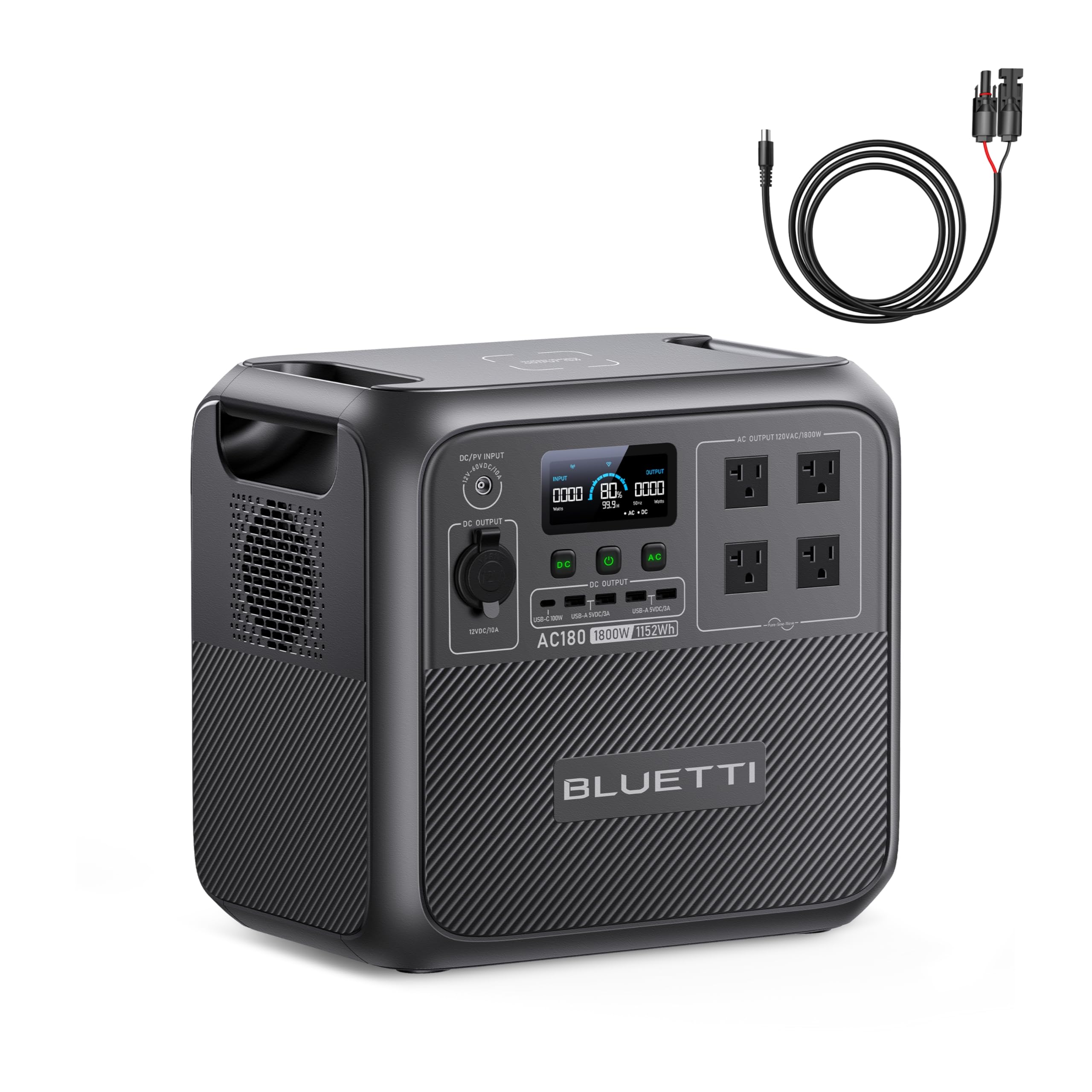
2,000+ ratings
Read Amazon ReviewsBLUETTI AC180
A strong fit for campers and households seeking a 1,152Wh portable station with fast AC charging, solar input, and backup power features.
- 1,152Wh LiFePO4 battery capacity.
- 1,800W rated output, with an app-enabled boost mode listed up to 2,700W.
- 11 outlets in total, including four 1,800W AC outlets.
- AC charging input up to 1,440W, with a listed full-charge estimate of about one hour.

Pros
- Large 1,152Wh capacity paired with a useful 1,800W rated output.
- Fast listed AC charging gives the station a relatively quick path back to full capacity.
Consider before buying
- A 1,152Wh battery still requires careful load and runtime planning; high-draw appliances can use stored energy quickly.
- The maximum solar input is 500W, so actual solar recharge depends on compatible panel capacity and conditions.
Read the full review summary
The AC180 is built around useful flexibility: it can be charged from AC, a vehicle, or solar, and its included cables support those different routes.
BLUETTI lists up to 1,440W AC input for a full charge in about an hour and up to 500W solar input, with a full solar charge estimated at 2.8–3.3 hours.
Solar time depends on having compatible panels and suitable sun, so buyers should factor those into an off-grid plan.
Its 1,152Wh capacity and 1,800W output suit buyers who need more than phone charging, such as powering a mix of campsite equipment or selected household essentials.
The app-enabled boost to 2,700W and a claimed 20ms UPS transition add useful operating options, though neither turns a battery station into unlimited or whole-home power.
Check each appliance’s running and startup demands, then estimate how long the planned load needs to run.
The buying factors
BLUETTI AC180 Scorecard
Editorial scores reflect listed features and buyer fit; they are not laboratory measurements or customer ratings.
Battery capacity
At 1,152Wh, the AC180 offers meaningful stored energy for trips and targeted outage support, while still requiring load planning for longer use.
AC output
Its 1,800W rated output covers a broad range of portable needs, with an app-enabled boost mode listed up to 2,700W.
AC recharge speed
The listed 1,440W AC input and roughly one-hour full-charge estimate make quick turnaround a central strength.
Solar flexibility
A built-in MPPT controller accepts up to 500W solar input, and the listed solar recharge estimate is useful for planning.
Backup role
The stated 20ms UPS transition makes it relevant for selected essentials, though buyers should confirm that timing works for their devices.
Portability for capacity
The capacity favors useful runtime but signals a larger station to plan around than a compact power bank; the product data gives no weight for judging carrying effort.
Key Features and Specifications of BLUETTI AC180
- 1,152Wh LiFePO4 battery capacity.
- 1,800W rated output, with an app-enabled boost mode listed up to 2,700W.
- 11 outlets in total, including four 1,800W AC outlets.
- AC charging input up to 1,440W, with a listed full-charge estimate of about one hour.
- Built-in MPPT controller supports up to 500W solar input; listed solar full-charge time is 2.8–3.3 hours.
- A claimed 20ms UPS transition for emergency power to selected essentials.
- Package includes AC, car, and solar charging cables, plus a user manual.
Pros and Cons of BLUETTI AC180
Pros
- Large 1,152Wh capacity paired with a useful 1,800W rated output.
- Fast listed AC charging gives the station a relatively quick path back to full capacity.
- Solar input supports replenishment away from a wall outlet when compatible panels and sunlight are available.
- The included car and solar cables give buyers multiple charging routes to work with.
Consider before buying
- A 1,152Wh battery still requires careful load and runtime planning; high-draw appliances can use stored energy quickly.
- The maximum solar input is 500W, so actual solar recharge depends on compatible panel capacity and conditions.
- The 2,700W boost depends on enabling the mode in the app, and buyers should verify their appliance’s requirements before relying on it.
- No product weight is provided here, so buyers who need frequent carrying should check the unit’s dimensions and handling details before purchase.
Who Should Buy BLUETTI AC180?
Good fit
Consider the AC180 if you want a portable station for camping, road trips, or selected household backup and value several ways to recharge it.
Its 1,152Wh capacity gives more planning room than a small electronics-focused battery, while 1,800W output makes it relevant to a wider range of gear.
Make a list of the devices you plan to power and add up their wattage and expected run time before deciding whether the capacity is sufficient.
It also makes sense for buyers who can recharge between uses from AC power or who have a compatible solar setup.
The listed one-hour AC charge estimate is attractive for quick turnaround, and solar input can extend its usefulness where sunshine is available.
Treat the solar estimate as a planning reference rather than a guaranteed result, since panel configuration and conditions matter.
Who should skip it
Look elsewhere if your priority is a very small, light battery for a backpack or if you need enough energy for extended use of multiple high-draw appliances.
A 1,152Wh station has a different role from a compact power bank, and battery runtime depends on the load.
If you need backup for equipment that cannot tolerate a brief interruption, verify that the stated 20ms UPS transition suits that equipment.
Also confirm the exact AC output and startup requirements of any appliance you plan to run, especially when considering the app-enabled boost mode.
How the BLUETTI AC180 Fits Real-World Power Needs
Capacity and load planning
The 1,152Wh rating gives a useful starting point for estimating stored energy, but it does not translate directly into a fixed runtime for every device.
Add the wattage of simultaneous loads and consider how long they need to run. This is especially important for heaters, cooking equipment, or other devices that draw substantial power.
Output and the boost mode
A rated 1,800W output covers many portable-power tasks, while the app-enabled boost is listed up to 2,700W. Because the boost is a selectable mode, check the app setup and the appliance’s operating requirements before depending on it.
The product information does not specify how every device will behave in that mode.
Choosing between AC and solar recharging
The AC180 gives buyers a fast wall-charging route and a solar route with up to 500W input.
AC charging is the more straightforward choice when a suitable outlet is available; solar is useful for off-grid replenishment but calls for compatible panels and favorable conditions.
Compare panel output and your available daylight with the listed 2.8–3.3-hour estimate.
Using it as outage support
The claimed 20ms UPS transition positions the unit for selected essentials such as networking or other devices where backup power is useful.
Before treating it as a backup solution, confirm which loads matter, whether their power needs fit, and whether the transition time is acceptable for them.
Its stored energy is finite, so prioritize essentials and plan how to recharge if an outage continues.
Alternatives to BLUETTI AC180
Outdoor Generators alternative
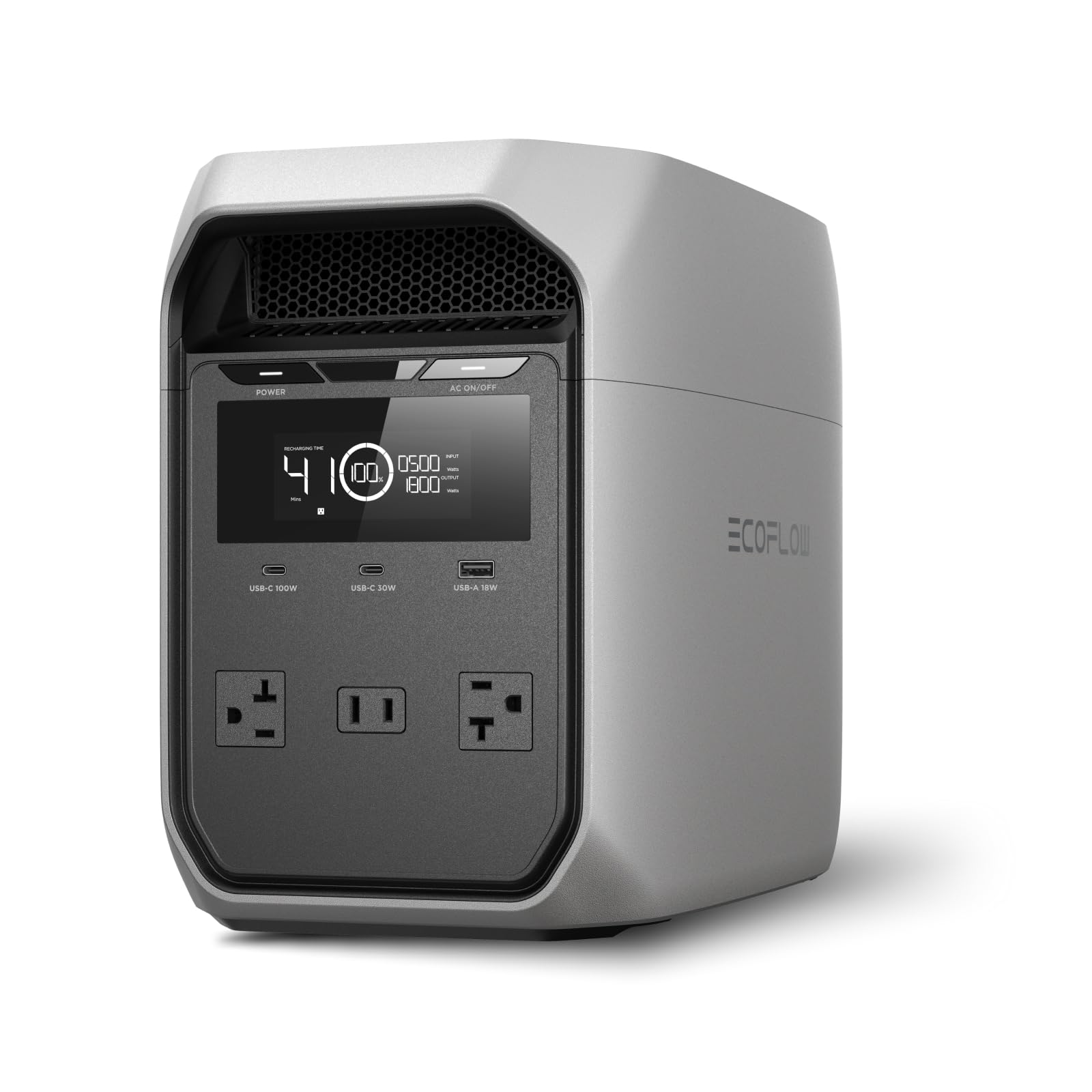
1,000+ ratings
Read Amazon ReviewsEcoFlow DELTA 3 Classic
Choose between them based on the backup and charging details that matter most: the AC180 has slightly greater listed capacity and includes car and solar charging cables, while the DELTA 3 Classic lists a faster UPS transition and 3,600W surge.
Confirm your appliances’ needs and any included accessories for the specific package.
- The DELTA 3 Classic lists 1,024Wh capacity, 1,800W output, 3,600W surge, a stated under-10ms UPS transition, and optional solar charging at up to 500W.
- The AC180 has 1,152Wh capacity, 1,800W rated output, up to 500W solar input, and a listed 20ms UPS transition.
Outdoor Generators alternative
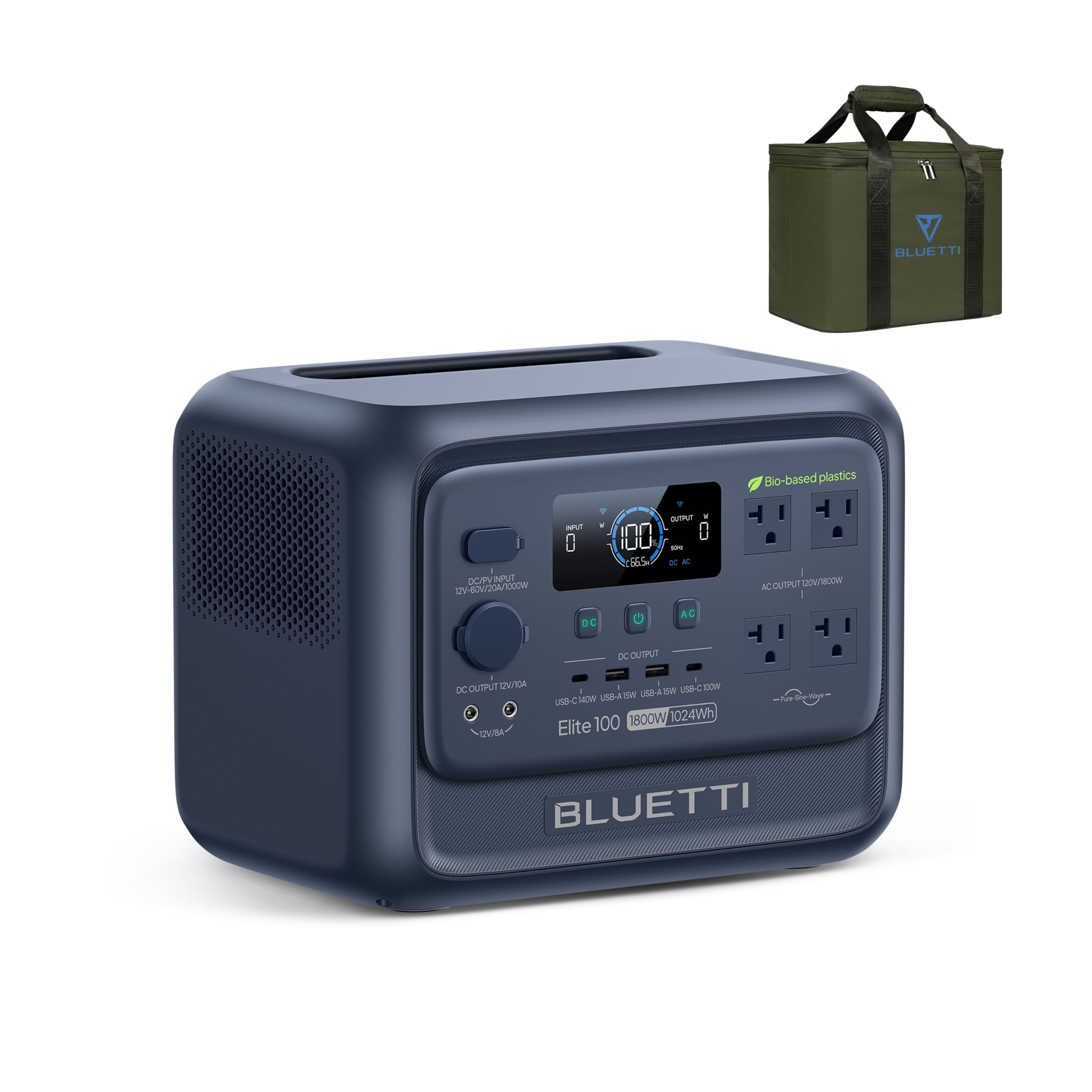
2,000+ ratings
Read Amazon ReviewsBLUETTI Elite 100 V2
The AC180 offers more listed battery capacity, while the Elite 100 V2 has a stated 25-pound weight and higher maximum solar input.
Consider the AC180 if capacity is the priority; consider the Elite if those portability details and solar input fit your setup better. Verify the bag arrangement and included items when comparing packages.
- The Elite 100 V2 lists 1,024Wh capacity and 1,800W output, weighs 25 pounds, and supports up to 1,000W solar input.
- Its supplied package information names a bag shipped separately.
- The AC180 lists 1,152Wh capacity, 1,800W output, and solar input up to 500W.
Is BLUETTI AC180 Worth It?
The BLUETTI AC180 is worth considering for buyers who want a substantial portable power station with 1,800W output, several charging options, and a fast listed AC recharge.
It is particularly compelling when you can recharge between outings or pair it with compatible solar panels.
Before buying, match its capacity and output to the appliances you need to run, and check the unit’s handling details if you expect frequent transport.
The 2,700W boost and UPS feature are useful considerations, but they do not replace checking device requirements and planning around finite battery energy.
Your review at a glance
2,000+ ratings
Read Amazon ReviewsBLUETTI AC180
A strong fit for campers and households seeking a 1,152Wh portable station with fast AC charging, solar input, and backup power features.
- 1,152Wh LiFePO4 battery capacity.
- 1,800W rated output, with an app-enabled boost mode listed up to 2,700W.
- 11 outlets in total, including four 1,800W AC outlets.
- AC charging input up to 1,440W, with a listed full-charge estimate of about one hour.